RSS

In Response to Tom “Donald Davidson's ‘What Metaphors Mean’”


In Response to Tom “Donald Davidson's ‘What Metaphors Mean’”


After reading Tom’s blogpost that concerned his thoughts about David Davidson’s argument regarding metaphors, I began to question a few ideas that Tom raised. Before I proceed, I should point out that Tom’s post was certainly beneficial in providing some sort of introduction to Davidson’s argument. In addition, I agree with most of the point raised in the post. However, there were certain ideas brought up that I now wish to consider further.


“The literal meaning of a metaphor is the correct interpretation of what the words say. That is not to say that the metaphor should be taken literally.”


This statement caused me a lot of confusion. In essence, it seems that the first sentence is stating that, a metaphor is correctly interpreted through its literal meaning; thus, this is the way in which the reader should interpret it. However, the next sentence states that a metaphor should not be interpreted in its literal sense. At this point, I cannot help but interpret this passage as being anything else but inherently contradictory. With that being said, I think that I do understand the point that is being made. Davidson does concede that a metaphor clearly does have an effect on the reader which goes beyond the words literal meanings. However, this is not to say that metaphors are interpreted as having some metaphorical, hidden meaning. They are interpreted literally, but this process ultimately causes the reader to make connections between ideas. Davidson says, “I have no quarrel with these descriptions of the effects of metaphor, only with the associated views as to how metaphor is supposed to produce them. (228)”. Davidson is not denying that metaphors cause the reader to make connections that run deeper than the words literal meanings, however, he maintains that there is no other way in which to interpret a metaphor than by its literal meaning. Accordingly, under Davidson’s view, it seems that it may be misguided to state that a metaphor should not be taken literally. I understand that metaphors work in a way in which the reader ends up accepting a statement in its literal sense. However, the only way in which the reader can interpret the metaphor is through using the words literal meanings because of the fact that there is no hidden meaning.

  • Digg
  • Del.icio.us
  • StumbleUpon
  • Reddit
  • RSS

Could this be the way in which we interpret metaphorical meaning?

  • Digg
  • Del.icio.us
  • StumbleUpon
  • Reddit
  • RSS

Questions from Q&A 5

Questions from Q&A 5 (Part 1)
Q: Although Davidson maintains that metaphors do not contain any specific cognitive content, is it possible to support his view of metaphors, while, at the same time agree that certain meanings of metaphors are more likely?
We spent a significant amount of class time on Friday discussing the fact that Davidson stated that metaphors do not have any specific cognitive meaning. Accordingly, accepted prima facie, this would imply that metaphors could be interpreted in any way. As expected, Davidson received a lot of heat from our class because of this statement. I completely understand why this is seen as problematic, but it seems that we may not being providing our best interpretive charity in the case of analyzing Davidson’s argument. I say this because, while writing my Q&A, I began to question whether Davidson’s theory should be interpreted as stating that absolutely any possible meaning for a metaphor should be viewed at the same level of effectiveness.

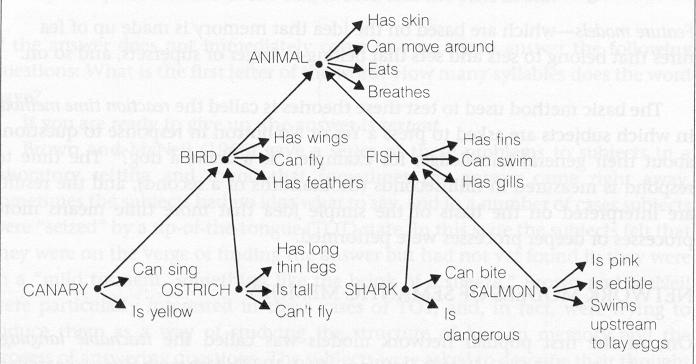
I accept the idea that every metaphor does not have any specific cognitive meaning, but does this also imply that every possible meaning for a metaphor should be viewed as equal in consideration? For example, Nicole stated in class that if we use the metaphor “Henry was a lion”, the term lion could not possible be referring to a space alien. Avery responded to Nicole by pointing out that an example could be construed to illustrate that lion, could in fact, be interpreted as referring to a space alien. Avery also mentioned that this would also be a very rare occurrence, and that in the majority of cases, the metaphorical meaning of Lion would be viewed as only being one of a limited number of choices. Accordingly, it seems that although almost any possible metaphorical meaning could work within a certain context, there could be a network of possible meanings that are ranked according to relevance. Therefore, Davidson may maintain that each metaphor could be interpreted in a vast number of ways, but this does not mean that we should not put preferences of certain meanings.

  • Digg
  • Del.icio.us
  • StumbleUpon
  • Reddit
  • RSS